Extended Info:
Purchase at your own pace without missing out on multiple purchase discounts. Discounts are applied retrospectively, so as you reach each purchase milestone—4, 8, 12, 20, and 40 feeders – all of your current and previous purchases are discounted at the same level.
Note: Discount program amounts include all grain and hay feeder purchases. Creep panels, creep gates, roofs, and other accessories or attachments are not included.
Extended Info:
Purchase at your own pace without missing out on multiple purchase discounts. Discounts are applied retrospectively, so as you reach each purchase milestone—4, 8, 12, 20, and 40 feeders – all of your current and previous purchases are discounted at the same level.
Note: Discount program amounts include all grain and hay feeder purchases. Creep panels, creep gates, roofs, and other accessories or attachments are not included.
Extended Info:
Purchase at your own pace without missing out on multiple purchase discounts. Discounts are applied retrospectively, so as you reach each purchase milestone—4, 8, 12, 20, and 40 feeders – all of your current and previous purchases are discounted at the same level.
Note: Discount program amounts include all grain and hay feeder purchases. Creep panels, creep gates, roofs, and other accessories or attachments are not included.
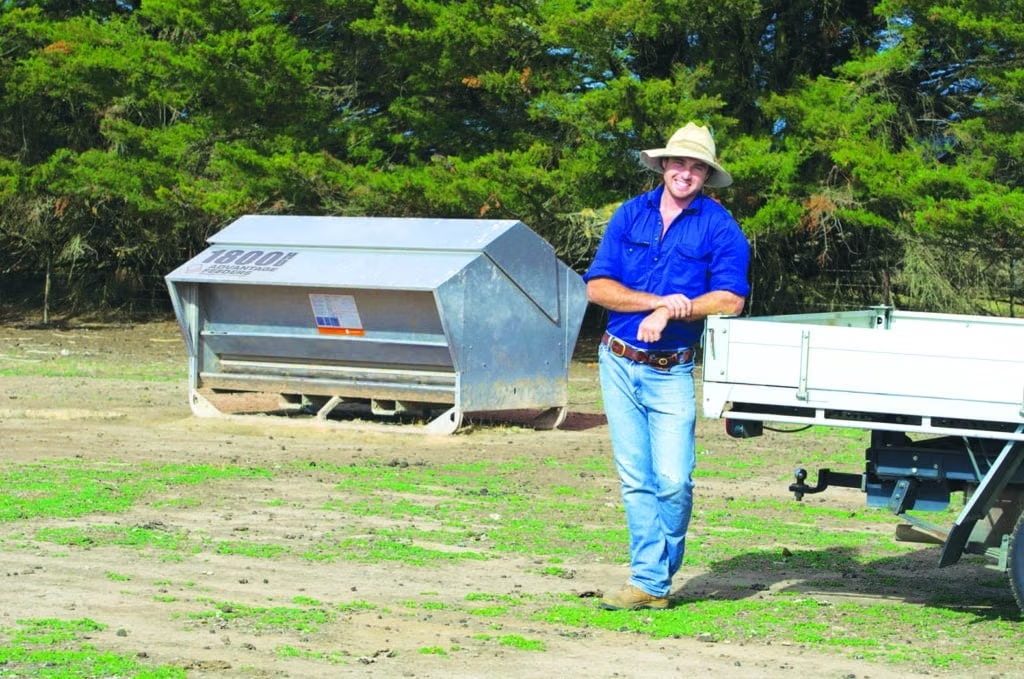
An on-farm trial found that mobs of twin bearing composite ewes supplemented in late pregnancy
and into lambing were able to rear more lambs/Ha.
A paddock was split on half and the ewes that were supplement fed with Advantage Feeders ate significantly less pasture compared to a group that were trail fed
up to lambing.
This shows the potential to increase the winter stocking rate of ewes by 89%. The Advantage Feeders supplemented ewes also marked 28% more lambs.
| Advantage Feeders groups | Control group | |
|---|---|---|
| Quantity in each mob | 115 | 115 |
| Ewes/Ha | 7.4 | 7.4 |
| Ewe age | 2-3 year old | 2-3 year old |
| Foetuses | Twins | Twins |
| Average lambing date | 10/08/2015 | 10/08/2015 |
| Weaning date | 10/11/2015 | 10/11/2015 |
| Pre lambing supplement: 28 days | 300g/day of oats | 300g/day of oats (fed every 2nd day) |
| Post lambing supplement: 21 days | 300g/day of oats | No feed |
Note: It is common within the industry for weaning rates to vary within mobs and from year to year, despite having similar conditions. The results in this trial showed a 28% increase in marking rate however the sample size of the trial group is only one. The average increase in weaning rates from twin bearing ewes would more conservatively be 15%
1. Calves per feed input which was increased from 25 calves to the commercial application of 50 calves per feeder
2. The outputs used the calculator from www. advantagefeeders.com.au/calculating-return-on-investment
3. The outputs includes the costs associated with filling, monitoring and depreciation.2x NGF1800 feeders for the Supplement mob. This also assumes that this application of feeders accounts for 50% of their use throughout the whole year.
There are a number of challenges facing profitable lamb production farms. These include:
Doug Laidlaw, the experiment operator, had the following observation throughout the experiment:
“One of the real benefits that we can see in this system is that it would enable us to increase our stocking rate. The pasture that contained the feeder had noticeably more pasture in it all through all of lambing.
The pasture in the Advantage Feeders group ran out to 3000kgDm/Ha at marking. Normal practice would be to keep pasture availability lower to ensure it higher quality. For the purpose of the trial, the ewes were set stocked to evaluate the change in FOO.
The bigger difference we saw in the range of weights in each mob. The mob without the feeder had less variation in the range of weights. This could have been due to the higher lamb survival rates in the Advantage Feeders mob.”
| Advantage Feeders group | Control fed group | |
|---|---|---|
| KgDm FOO (2/7/15) | 800 | 800 |
| KgDm FOO (20/8/15) | 3000 | 2000 |
| Change in KgDm FOO/HA | 2200 | 1200 |
| Pasture consumption of a ewe in late pasture waste, based on a 80kg ewe | 3.08 | – |
| Additional ewes/Ha that could be run to reduce FOO by 1000kgDM/Ha (2200-1200) over 49 days | 6.6 | n/a |
| Total ewes/Ha for equal pasture FOO | 14.0 | 7.4 |
| Lambs marked | 206 | 174 |
| Lambs marking % | 179% | 151% |
| Oats cost/Ha: based on ewes/Ha for equal pasture FOO and oats at $250/tonne | $55.88 | $14.16 |
| Depreciation cost/Ha* | $5.34 | $ – |
| Feeder filling cost/Ha ($20/tonne) | $4.47 | $ – |
| Trail feeding cost/Ha ($50/tonne) | $ – | $2.83 |
| TOTAL ADDITIONAL COSTS/HA | $65.68 | $16.99 |
| Marking weight (kg): 1/9/15 | 12.0 | 11.0 |
| Value of lambs at marking ($4/kgLW | $48.00 | $44.00 |
| TOTAL ADDITIONAL INCOME/HA: Base on Equal pasture FOO ($2.5/kgLW) and an increase of 15% of lambs marked | $1,173.07 | $493.94 |
| TOTAL PROFIT/HA | $1,107.39 | $476.94 |
*This is calculated by multiplying the depreciation rate of 15% by the investment of $2088 for one HD1800 with Creep Panels and that the trial period makes up 50% of the feeder use per annum.
Opportunity to expand the trial to increase production:
Creep feeding is the process of supplementing feeding lambs from 2-3 weeks of age. This system can follow the completion of the ewes being supplementing post lambing. Creep feeding increases farm production in a number of ways:
The experiment shows that Advantage Feeders group of 115 ewes ate significantly less pasture. The recommendation is for ewe stocking rate to be increased from 6.6 ewes/HA to 14.0 ewes/Ha.
The results show an increase of 28% marked more lambs and an increase profit/Ha by $630.40 (based on a reduced lamb marking increase of 15%.
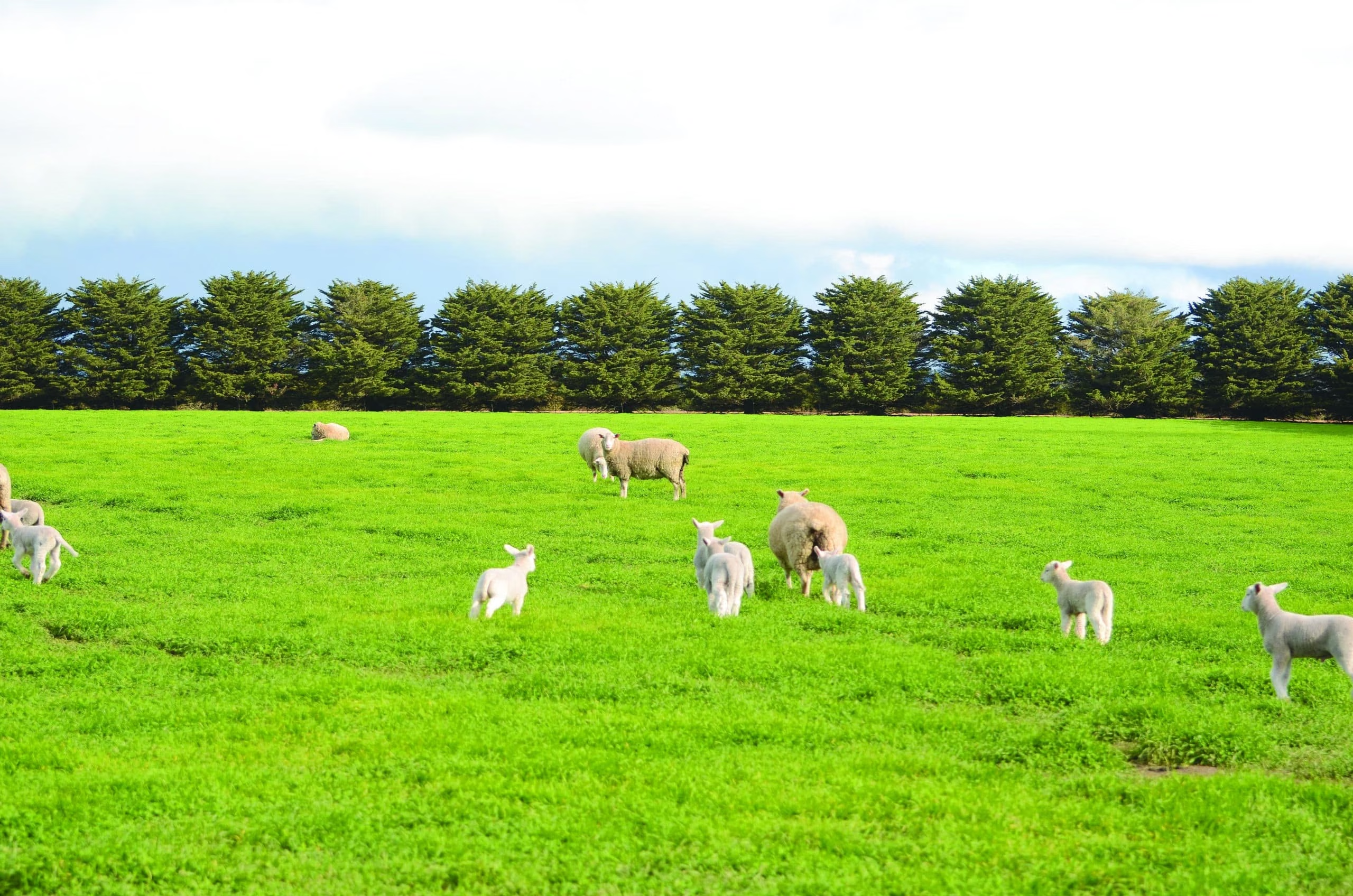
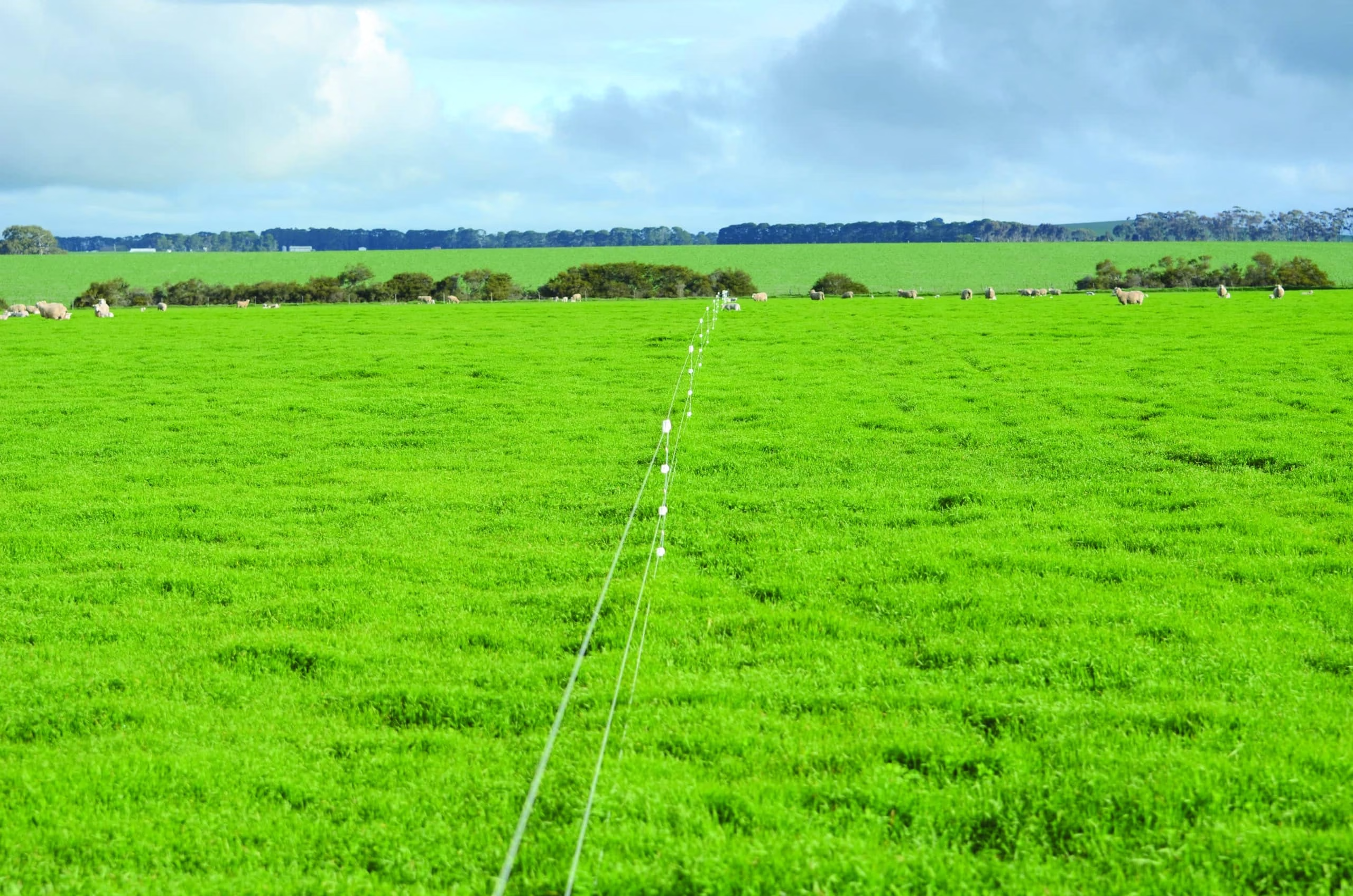
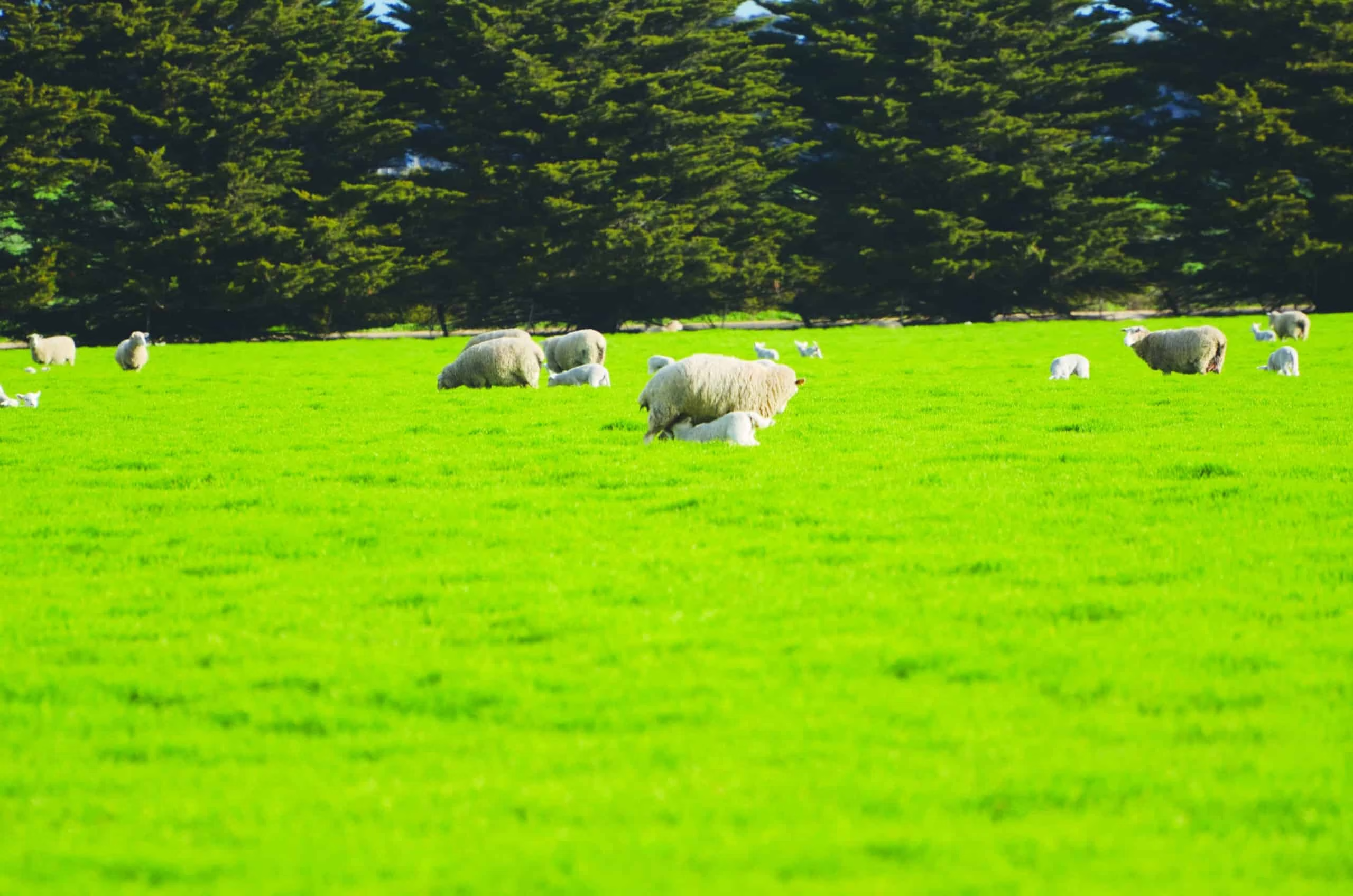
We conduct on-farm trials to test and demonstrate the effectiveness of our products. Each trial provides practical, evidence-based insights that guide our work and support informed decision-making.
Advantage Feeders was developed in Australia and is now used by livestock producers in Canada and around the world.
Advantage Feeders are distributed in Canada by Huber Ag Equipment, based on a working farm in Alberta where the feeders are used with cattle, sheep and goats.
Feeders can be collected directly from the farm, shipped to designated pickup locations, or delivered directly to your operation depending on location.
Our range includes controlled grain and pellet feeders for cattle, sheep and goats, along with creep-feeding and hay-feeding solutions designed to help producers improve feed efficiency, pasture utilization and livestock performance.
Advancing Ruminant Production
Help livestock farmers double meat production with the same level of inputs
Through continual research and development, we strive to provide livestock farmers with the world’s best controlled feeding products, knowledge and systems that allow them to achieve the highest return on investment